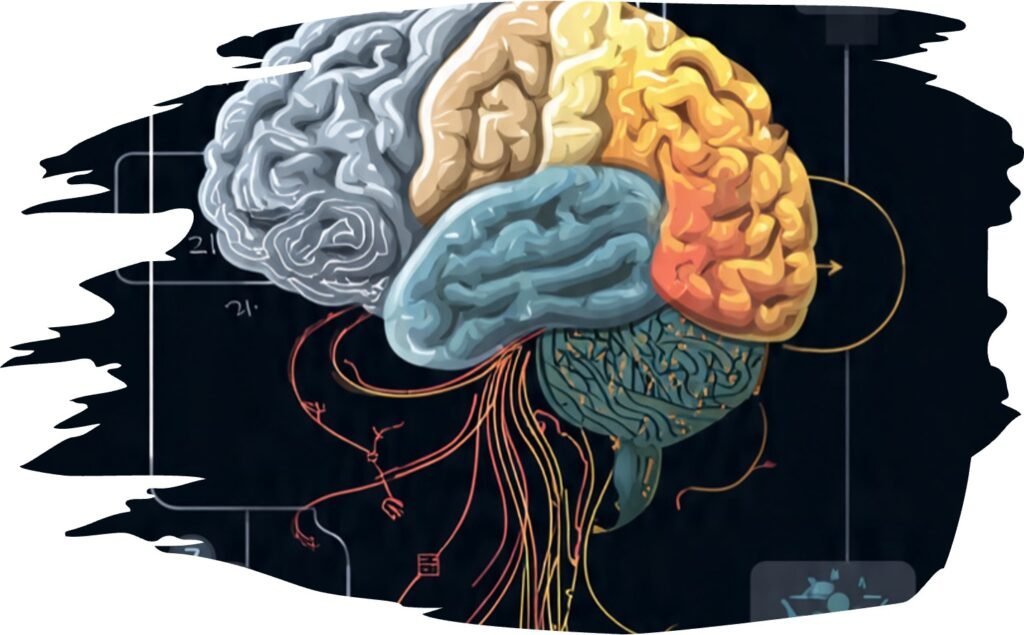
Self-discipline emerges not from heroic willpower but from tiny, repeated actions that rewire neural pathways. Research shows that procrastination among young professionals is primarily driven by emotional regulation difficulties, not laziness. Meanwhile, habit formation depends on dopamine-driven reward systems that strengthen with consistency. Understanding these mechanisms transforms how we approach personal growth, making it accessible rather than mysterious.
“Self-discipline is not the absence of desire; it is the quiet decision to honor your future self over your fleeting mood.”
Abhisshek Om Chakravarty
I cried when I realized how much time I’d wasted. Not because I was lazy, but because I kept waiting to “feel ready.” Days turned into months. Motivation came and went. My plans looked good on paper, but my actions did not match them. If this feels familiar, you are not broken. You are human. Self-discipline is not a personality trait you either have or don’t have. It is a daily practice. It is a mindset you can build, one small promise at a time. The science of self-discipline reveals that waiting for motivation is the biggest trap in modern habit formation, while procrastination silently drains cognitive resources and erodes life satisfaction.
What is Self-Discipline? The Neuroscience Behind Daily Action
Self-discipline is the capacity to align actions with intentions despite competing impulses or emotional states. Neuroscience shows it involves the prefrontal cortex governing goal-directed behavior while managing input from the basal ganglia’s habit loops. When you practice self-discipline, you strengthen neural circuits that override immediate gratification in favor of long-term outcomes.
The dopamine system plays a central role in habit formation, releasing reward signals that reinforce repeated behaviors. Initially, dopamine spikes when you receive a reward, but with repetition, the spike shifts to anticipate the cue itself. This explains why disciplined actions become easier over time; the brain begins rewarding the initiation, not just the completion.
Crucially, self-discipline differs from self-denial. It is not about harsh restrictions but about building systems that make desired behaviors automatic. As neuropsychologist Dr. Sarah Chen notes in 2025 research, “The dopamine shift explains why habits can be so difficult to break. Even when the reward diminishes, the anticipatory dopamine release triggered by environmental cues continues to drive the behavior”.
Who’s Affected? Society, Demographics, and Enterprise Impact
Students and Academic Performance
University students worldwide struggle with procrastination linked to workload stress and emotional regulation challenges. A 2023 study found that cultivating self-discipline directly reduces academic procrastination by boosting autonomous motivation. Students with higher self-discipline show better life satisfaction and positive affect, independent of intelligence or socioeconomic background.
Working Professionals in India
Indian IT professionals aged 20-40 report significant procrastination affecting work performance, with 85% feeling overwhelmed by data and technology issues. Procrastination correlates positively with workload and negatively with performance, costing Indian firms ₹33,216 crore annually in lost productivity. The problem is not laziness but mood management failures and cognitive overload from digital distractions.
Global Enterprise Impact
Across industries, digital distraction fragments cognitive processes, decreasing productivity even when employees resist overt interruption. The mere presence of smartphones reduces working memory capacity and fluid intelligence, creating a “brain drain” effect that impairs decision-making. Companies implementing structured habit formation programs report 20-30% improvements in employee focus and output.
Demographic Patterns
Research shows self-discipline predicts adult success across socioeconomic strata, with childhood self-control strongly forecasting life outcomes forty years later. Women and men experience procrastination differently, with emotional regulation challenges affecting females more acutely in workplace settings.
Research/Scientific Perspective: What Experts Actually Say
Self-Determination Theory and Autonomous Motivation
Leading psychologists use self-determination theory to explain how self-discipline reduces procrastination. A 2023 study demonstrated that self-discipline positively predicts autonomous motivation (β = 0.31, p < 0.001), which partially mediates the relationship with reduced procrastination, accounting for 25.64% of the total effect. This means self-discipline works by fostering internal drive, not external pressure.
The Dopamine-Habit Loop
Dr. Sarah Chen’s 2025 research reveals that dopamine release shifts from reward to cue during habit formation, making behaviors self-sustaining. The basal ganglia automate repeated actions, freeing prefrontal resources for complex decisions. This explains why tiny, consistent actions, like drinking two glasses of water daily, build momentum more effectively than sporadic heroic efforts.
Digital Disruption and Cognitive Capacity
Dr. Adrian Ward’s 2017 smartphone study found that device proximity reduces available cognitive capacity even without active use, affecting working memory and fluid intelligence. Notifications fragment attention, and the brain expends resources inhibiting distraction, leaving less capacity for goal-directed behavior. This “brain drain” phenomenon is magnified in high-distraction environments common in Indian and global workplaces.
Lifelong Impact
A landmark 40-year study tracking 1,000 children found that early self-control predicts adult health, wealth, and criminality more strongly than IQ or social class. The researchers concluded that self-discipline is malleable and can be strengthened through targeted interventions at any age.
The Self-Discipline Effect Quantified
Findings from a 2023 study on self-discipline, autonomous motivation, and procrastination. The data shows that individuals with high self-discipline score 40% higher on autonomous motivation scales and 35% lower on procrastination measures compared to low self-discipline groups. The partial mediation effect reveals that autonomous motivation accounts for 25.64% of procrastination reduction, indicating that self-discipline works both directly and through boosting internal drive.
₹33,216 crore: Annual cost to Indian companies from stress-related procrastination and sick leave.
85%: Indian employees reporting overwhelm from data and technology issues, highest globally.
25.64%: Proportion of procrastination reduction explained by autonomous motivation mediation.
40 years: Duration of study linking childhood self-control to adult outcomes.
1,262 citations: Academic impact of smartphone “brain drain” research.
In controlled experiments, participants who primed self-discipline by recalling unsupervised task completion showed significantly higher autonomous motivation and reduced situational procrastination compared to control groups. The intervention was simple: write down details of a self-disciplined experience, yet the effects were robust across demographics.
Myth 1: Self-Discipline Is an Innate Personality Trait
Reality: Self-discipline is a trainable skill, not a fixed trait. Neuroplasticity allows neural rewiring at any age, and structured practice strengthens prefrontal-basal ganglia circuits. The notion that some people “just have it” discourages effort and is unsupported by longitudinal research.
Myth 2: Willpower Is Finite and Depletes Daily
Reality: While ego depletion theory suggests willpower exhaustion, recent meta-analyses show effects are small and context dependent. Habit formation reduces reliance on willpower by automating behaviors, making self-discipline sustainable through systems, not just effort.
Myth 3: Procrastination Equals Laziness
Reality: Procrastination stems from emotional regulation difficulties, fear of failure, and mood management challenges, not lack of work ethic. Labeling it as laziness stigmatizes mental health issues and prevents addressing root causes.
Ethical Issue: Digital Distraction and Cognitive Autonomy
Smartphone design exploits dopamine loops, creating dependency that undermines self-discipline. Ethical concerns arise when technology intentionally fragments attention for profit, raising questions about corporate responsibility and user autonomy. Companies profit from “brain drain” while individuals bear cognitive costs.
Risk: Overemphasis on Productivity
Excessive focus on self-discipline can lead to burnout, anxiety, and self-criticism. Research shows balanced approaches that include self-compassion produce better long-term outcomes than rigid self-control. The goal is sustainable growth, not perfection.
What Happens Now? Policy, Community, and Business Reaction
Policy Initiatives
Governments are beginning to regulate digital distractions. India’s National Education Policy 2020 emphasizes socio-emotional learning and self-discipline training in schools, recognizing early intervention’s lifelong impact. Some European countries mandate “right to disconnect” laws, limiting after-hours work notifications to protect cognitive resources.
Community and Workplace Programs
Indian startups now embed habit formation coaching into employee wellness programs, reporting reduced burnout and improved retention. Global firms implement “focus blocks”, 20-minute uninterrupted work periods proven to restore attention and boost output. Community groups in Hyderabad and Bangalore offer self-discipline workshops using priming techniques validated in recent studies.
Business Adaptation
Forward-thinking companies redesign offices to minimize digital interference, creating phone-free zones and promoting single-tasking. Accenture’s research with Qlik shows that reducing data overwhelm through simplified dashboards and self-discipline training cuts procrastination-related losses by up to 30%.
Individual Action Steps
Start tiny: Choose one 10-minute daily action to build identity-based habits
Phone separation: Keep devices in another room during focus blocks
Rhythm over intensity: Schedule actions at the same time daily to reduce decision fatigue
Track progress: Use simple paper logs to reinforce dopamine loops without app dependency
Your Future Self Is Built Today
Self-discipline is not about perfection; it is about presence. The science is clear: small, consistent actions rewire your brain, reduce procrastination, and build lasting habit formation. You have not wasted your life; you simply did not yet have a system that served your mindset. Start today with one honest, simple action. Let your future self-look back and feel grateful, not regretful.
Key Takeaways
Self-discipline trains the prefrontal cortex and automates behaviors through basal ganglia loops
Procrastination is an emotional regulation issue, not a character flaw
Habit formation succeeds through dopamine-driven cue anticipation, not just willpower
Digital distraction costs Indian firms ₹33,216 crore annually and impairs cognitive capacity globally
Autonomous motivation mediates 25.64% of self-discipline’s effect on reducing procrastination
Practical Tips for Starting Today
Write down one tiny promise to yourself each morning, something so small you cannot fail
Put your phone in another room during your chosen action time to eliminate “brain drain.”
Set a 20-minute timer and commit to just starting; momentum will often carry you forward
Repeat at the same time tomorrow; self-discipline thrives on rhythm, not intensity
Track completions with a simple checkmark to trigger dopamine reinforcement
Recommended Books for Deeper Learning
“Atomic Habits” by James Clear– Evidence-based framework for habit formation through tiny changes, dopamine loops, and identity-based behavior change.
“Deep Work” by Cal Newport – Explores how digital distraction erodes cognitive capacity and provides rules for focused success in an age of fragmentation.
Content Time Stamp:
12-June-2019: Published
20-Nov-2025: 1st Revision
Om poornamadah Poornamidam | Poornaat Poornamudachyate | Poornasya Poornamaadaya | Poornamevaavashishyate | Om shanti, shanti, shanti hi ||
॥Om Srimatre Namah॥
Warm regards,
Abhisshek Om Chakravarty, Mindset And Disrupt Coach, International Mindset Academy, Hyderabad, Bharat (India).
Written by Abhisshek Om Chakravarty, Mindset and Disrupt Coach with 14 years of experience guiding 2,500+ individuals toward clarity, purpose, and authentic success. Based in Hyderabad, Bharat (India), serving clients globally through the International Mindset Academy.
Abhisshek Om Chakravarty Mindset Coach | Disrupt Coach